
Based on your needs, here is an article outline about conductive copper bars and other conductor materials used for transmitting electricity:
Application of Conductive Copper Bars and Other Conductor Materials in Power Transmission
Introduction
In the field of industrial automation, the power supply for mobile equipment is a critical issue. To ensure that these devices can move freely on tracks while receiving a stable power supply, the sliding contact line system has become an ideal solution. Among these, conductive copper bars are one of the most common conductor materials in sliding contact line systems.
1. Overview of Sliding Contact Line Systems
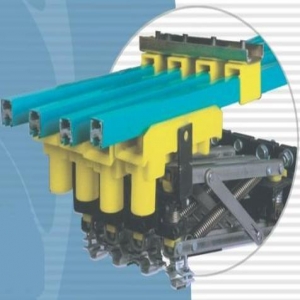
Sliding contact line systems mainly consist of conductive copper bars (or other conductors), current collectors (sliders), and supporting structures. This system is widely used in various occasions, such as cranes in factories, automated warehousing systems, electric trolleys, etc.
2. Characteristics of Conductive Copper Bars
High Conductivity: Copper has good electrical conductivity, which can effectively reduce energy loss during power transmission.
Corrosion Resistance: A dense oxide layer easily forms on the copper surface, which can prevent further corrosion and extend service life.
Mechanical Strength: Appropriate alloying treatment can give copper sufficient mechanical strength to cope with dynamic loads in sliding contact line systems.
3. Other Conductor Materials
In addition to copper, some other materials can also be used as conductors, for example:
Aluminum: Due to its lower cost and lighter weight, aluminum is also a viable choice in some application scenarios.
Silver: Although the cost is higher, silver has better conductivity than copper, and it is considered in applications with higher requirements for power transmission efficiency.
Composite Materials: Sometimes conductors made of composite materials are used, which combine the advantages of different materials to meet special working environment requirements.
4. Selection and Design of Conductive Copper Bars
Cross-Sectional Shape: Common cross-sectional shapes include rectangular, T-shaped, etc. Different shapes are suitable for different current densities and heat dissipation requirements.
Size and Length: Determine the appropriate size and length based on the current magnitude and distance in actual applications.
Insulation Treatment: To improve safety, conductive copper bars are usually insulated, for example, wrapped with plastic sleeves.
5. Installation and Maintenance
Installation: Conductive copper bars need to be installed according to strict standards to ensure the reliability of connections and overall stability.
Regular Inspection: Regularly check the wear of copper bars, the tightness of connection points, and the integrity of the insulation layer.
Cleaning and Maintenance: Regularly remove dust and impurities from conductive copper bars to keep the surface clean and avoid poor contact.
Conclusion
As the core component of sliding contact line systems, conductive copper bars play a vital role in ensuring the smooth operation of mobile equipment. Through reasonable design, careful installation, and regular maintenance, the efficiency and reliability of the system can be maximized.
I hope this article outline can provide you with useful information! If you need more detailed materials or content on other related topics, please feel free to let me know.