

Darui Electric recommends for you
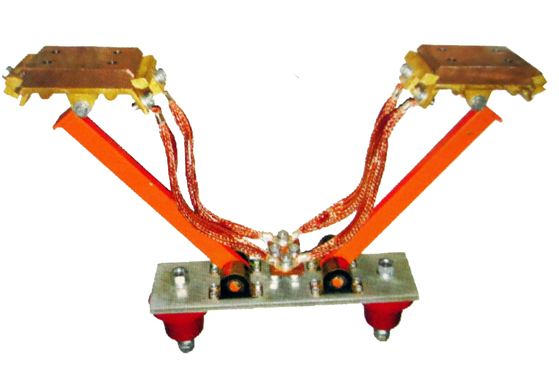
Sliding contact lines have two types: combined structure and composite structure. They are supported by high-strength special insulators, which are installed or welded on the brackets of the beams. They form a mobile power supply system for each hoisting equipment. Due to movement, mobile equipment needs to constantly change positions. At each different position, the mobile equipment must be able to obtain power at any time, otherwise they cannot move. At this time, contact lines came into being, with many conductors placed parallel along the execution track of the mobile equipment to supply power. On the mobile equipment, a current collector that can draw power from the conductors is installed. Therefore, as the facility moves, the current collector synchronizes with the facility, and power is drawn from the conductors at any time and provided to the facility, allowing the facility to continue moving.
Sliding contact lines have advantages such as long service life. The track is made of cold-rolled steel plate formed by one-time cold drawing to ensure the precision of the track cross-section dimensions. Copper busbars replace the unsafe, heavy, and problematic aspects of angle steel and other conductive methods, such as dust accumulation on indoor sliding lines and ice formation outdoors causing short circuits and affecting use. They also have domestic characteristics. The track uses coupler connectors and can be extended to any length as needed. Sliding contact lines can drive all trolleys to slide freely at any speed in the track. The guide rail is easy to install, requires no debugging, and has the advantages of contactless power supply, making it safe and reliable.
The quality of sliding contact lines can be measured according to the following standards:
1. Carbon brush service life - it is a consumable item. The quality of carbon brushes varies, with a difference of up to two times. Installation quality, travel distance, and speed affect the maintenance cycle of carbon brushes.
2. Shell quality - applicable temperature, environment, etc.
���
3. Current collector performance - mainly considered from the service life of wheels, the design of turning wheels, and whether the current collector can be used in various environments.
4. Expansion issues - when the length exceeds 100 meters, expansion issues need to be considered.
5. Voltage drop issues - the voltage drop varies according to the length of various copper bars.
Note: The above information and technical parameters are compiled and released by Yangzhou Darui Electric Co., Ltd.