
Single-pole and multi-pole sliding contact line current collectors are safe sliding contact lines
Single-pole and multi-pole sliding contact line current collectors are important installation equipment for picking up electrical energy on the collector side in a safe sliding contact line system. They indirectly conduct electrical energy to electrical appliances through the sliding contact between the collector brush and the guide rail, thereby completing the fragmented mobile power supply. The current collector consists of two parts: a mechanically structured frame installation and a collector brush that directly slides in contact with the guide rail. The mechanically structured frame installation of the single-pole and multi-pole sliding contact line current collector determines the sliding contact pressure between the collector brush and the guide rail and the stability of the mechanism. The collector carbon brush is a conductor that picks up electrical energy through sliding contact with the guide rail. Its function, conductive quality, and the quality of the material composition will indirectly affect the safe operation quality of all fragmented equipment.
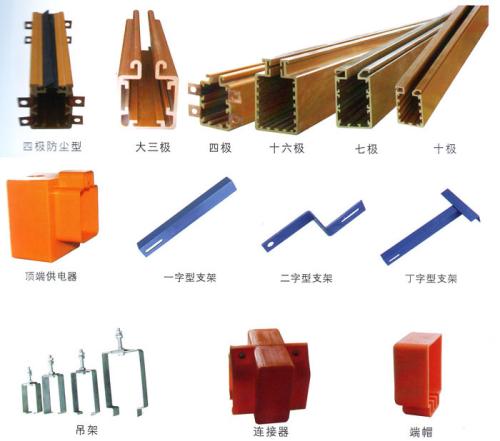
Sliding contact lines are used to supply power to moving equipment and consist of two parts: the sliding guide rail (fixed part, connected to the power source; multi-pole and single-pole guide rails are made by connecting single lengths of 4m or 6m per piece) and the current collector (sliding part, which can slide on or inside the sliding track and contacts the sliding contact line surface to collect electricity, used to connect with the moving motor).
Single-pole and multi-pole sliding contact line current collectors, also known as power collectors, are one of the most important components on the sliding contact line. Current passes through the sliding contact line conductor and is collected by the current collector, transmitting the current to the mobile electrical equipment. The current collector operates back and forth, and over time, damage to the carbon brush is inevitable, ending the service life of the current collector. Since this is unavoidable, we kindly remind you that we can extend its service life by choosing a high-quality current collector, which not only saves money but also improves work efficiency. Why not do it? So, in the procurement of current collectors, how can we distinguish high-quality current collectors?
The selection of a current collector should meet the following requirements: the rated working current value of the current collector, the operating speed of the crane, matching with the movement of related equipment, environmental conditions, good contact between the current collector and the conductor, and normal flexible movement.