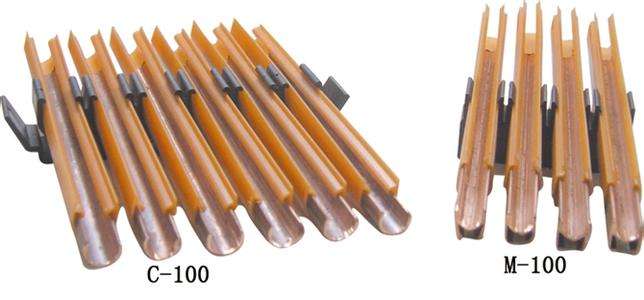

The multi-pole tubular sliding contact line is composed of high-strength engineering plastic insulating conduit or aluminum alloy protective shell, multi-level conductive copper bars, current collectors, and suspension, fixing and other components. With its compact design, stable performance, and safe use, it is widely applied in logistics automation assembly lines and testing lines with small currents and high frequency of use.
The multi-pole tubular sliding contact line mainly consists of a conduit and a conductor:
1. The conduit is a semi-enclosed special-shaped tubular component, which is the main part of the safety sliding contact line. Inside it, 2-9 guide rails can be embedded as power supply conductors as needed. Each guide rail is insulated from each other and from the shell, ensuring the safety of power supply. It also effectively prevents electric shock accidents for maintenance personnel during live maintenance. The conduit can be connected to any required length. Generally, the conduit is made in a straight line shape, but it can also be made into an arc shape according to special requirements.
2. The conductor is a set of brush shell frames running inside the conduit, driven by a fork installed on the electric mechanism, making it run synchronously with the electric mechanism, and transmitting the electrical energy through the guide rails and brushes to the motor or other control elements. The number of poles of the conductor brushes is 3-16, corresponding to the number of guide rails in the conduit.
During normal use of the multi-pole tubular sliding contact line, the following related components should be inspected regularly:
1. Check the brush wear condition of the conductor inside the conduit. If it exceeds the normal wear length, replace it in time.
2. Check the conduit (rail) joints for rust and looseness. Check whether the fixed increments, forks, etc. are loose.
3. Check whether the conduit is bent or deformed.
4. Remove dust accumulated on the conduit. When cleaning, do not use excessive force to avoid damaging the plastic conduit.
5. Check the brush wear condition in the conductor. When the brush wears to a distance less than 2mm from its limit extended position, replace the brush immediately.
6. Check the wear condition of the rollers. The rollers ensure the correct position of the brushes up, down, left, and right in the conduit. Excessive wear of the rollers can also cause brush wear or continuous power loss.