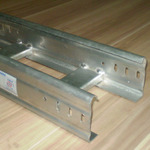
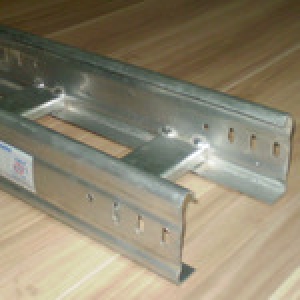
XQJ Series Cable Tray
XQJ Series Cable Tray is suitable for power cables with voltage below 10 kV, as well as control cables, lighting wiring, and other indoor and outdoor overhead cable trenches and tunnels.
(II) Structural Features and Installation
XQJ Series Cable Tray features a complete range of varieties, wide application, high strength, low cost, simple construction, flexible wiring, standard installation, and beautiful appearance, bringing convenience to your technical improvements, cable expansion, and maintenance and inspection.
XQJ Series Cable Tray installation can be adapted to local conditions. It can be installed overhead along process pipelines; suspended from floors or under beams; side-mounted on indoor and outdoor walls, columns, tunnels, and cable trench walls; and also installed on outdoor columns or supports. For large multi-layer tray hoisting or vertical installation, symmetrical installation on both sides of I-beam columns should be adopted as much as possible.
XQJ Series Cable Tray can be laid horizontally or vertically; can be turned, T-shaped, cross-shaped branches; can be adjusted in width and height.
(III) Layer Arrangement of Cables on Cable Tray
(IV) Cable Tray Size Selection and Calculation of Total Load G of Cable Tray
G total = n1q1 + n2q2 + n3q3
Where: q1, q2, q3, …… are the weight per unit length of each cable (Kg/m)
n1, n2, n3, …… are the number of corresponding cables
G should be less than the allowable load of the cable tray
When the cable tray is installed outdoors or with a protective cover, factors such as water load and wind load should also be considered.
IV. Cable Tray Precautions
1. The maximum load of the DQJ type cable tray device, the support spacing should be less than the allowable load and support span.
2. When selecting the width of the cable tray, some spare space should be reserved for future cable additions.
3. When there are few power cables and control cables, they can be installed in one cable tray, but a partition should be used to separate the power cables and control cables.
4. When laying horizontally, the connectors between trays should be set at about 1/4 of the span as much as possible. Horizontally running cables should be fixed every 2 meters or so, and vertically running cables should be fixed every 1.5 meters or so.
5. The cable tray device should have reliable grounding. If the tray is used as the grounding conductor, the ends of each layer of the tray should be connected (in parallel) with 16mm2 soft copper wire to the main grounding conductor. Long-distance cable trays should be grounded every 30-50 meters.
6. Except for shielding protective covers, when installed outdoors, a protective cover should be added on the top layer to prevent sun and rain.
If welding installation is required, the weld thickness around the weldment should not be less than the thickness of the base metal, and the weld must be anti-corrosion treated.