
Cable trays and busways are two common power distribution facilities in electrical engineering. They each have different functions and application scenarios. Below is a basic introduction to these two concepts and the differences between them.
Cable Tray
Cable tray is mainly used to support and protect cables, providing a way for cables to be laid inside or outside buildings. Cable trays can be classified by material into steel, aluminum alloy, and other types, and by structure into ladder type, tray type, trough type, and other forms. Cable trays not only effectively organize cable routing but also provide certain protective functions such as fire prevention, waterproofing, and dust prevention.
Busway
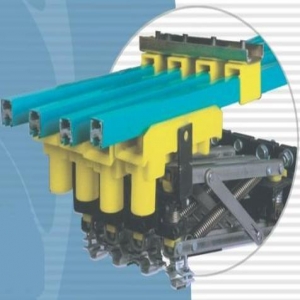
Busway is a system used for power transmission, consisting of a metal enclosure and internal conductive copper or aluminum bars. The design purpose of busway is to replace traditional cable power supply methods, providing high-current power distribution in large buildings, factories, and other places. Busway has advantages such as easy installation, convenient maintenance, and high current-carrying capacity.
Differences
Usage scenarios: Cable trays are mainly used for cable routing and management, while busways are used for direct power transmission.
Current-carrying capacity: Generally, busways can carry larger currents and are suitable for applications requiring greater power transmission.
Installation flexibility: Cable trays can be flexibly adjusted according to actual needs for cable routing, while busways are relatively fixed but faster and simpler to install.
Cost: Typically, the cost of cable trays is lower than that of busways, especially when the current demand is not particularly high.
In practical applications, the choice between cable trays and busways depends on the specific project requirements, such as current magnitude, space layout, budget, and other factors. When designing power distribution systems, engineers will decide on the most suitable solution based on these factors.