
Multi-level sliding contact wire is widely used due to its stable performance and safe use
Multi-level sliding contact wire mainly refers to the contact wire used for the catenary of electrified railways. Its structural characteristics include the use of copper, copper-silver alloy, high-strength copper-silver alloy, copper-tin alloy, copper-magnesium alloy, high-strength copper-magnesium alloy, etc., to meet the needs of electrified railway catenaries.
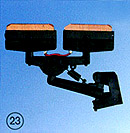
Multi-level sliding contact wire is composed of high-strength engineering plastic insulating conduit or aluminum alloy protective shell, multi-level conductive copper bars, current collectors, and suspension, fixing and other components. This product is widely used in logistics automation assembly lines and testing lines with small currents and high usage frequency due to its compact design, stable performance, and safe use.
The application fields are wide, the environment is complex, and there are many types of sliding wires. Therefore, it is important to choose the appropriate sliding wire. When selecting a sliding wire, one should first choose one with a thicker shell, which has a certain tolerance for rain and snow weather, high temperature, humidity, voltage, etc. The smaller the area occupied by the sliding wire, the better. The current collector is the primary device for picking up electric energy in the sliding contact wire system. It directly conducts electric energy to the electrical equipment through the sliding contact between the carbon brush and the guide rail, thereby achieving the mobile power supply of the system.
Product features:
1. Safety: The shell is made of engineering plastic with high insulation performance. The protection level of the shell can reach IP13 and IP55 as needed, which can protect against rain, snow, ice attack, and contact with hanging objects. The product withstands various environmental conditions. The insulation performance is good, and it is harmless to maintenance personnel touching the outside of the conductive conduit.
2. Reliability: The conductive rail has excellent conductivity, fast heat dissipation, high current density, low impedance, and low line loss. The carbon brush is made of metal graphite material with high conductivity and high wear resistance. The current collector moves flexibly, has good directional performance, and effectively controls contact arcs and series arcs.
3. Economy: The structure is simple, using copper bars with high current density, low resistivity, and low voltage loss as the conductive main body. It can save about 6% of electricity, realize replacing steel with plastic and copper with plastic, has a novel design, no need for other insulation structures, no need for compensation wires, and is installed on the same side as the crane control room, saving installation materials and costs. Its comprehensive cost is roughly the same as that of bare steel sliding wires.
4. Convenience: The multi-level busbars are integrated into one conduit, making assembly simple. The fixing brackets, connecting clamps, and suspension devices are supplied as universal parts, making installation, disassembly, adjustment, and maintenance very convenient.
After installation, the subsequent work is acceptance inspection, which mainly involves the following aspects:
1. Whether the specifications match the contract content. Compare with the contract specifications, current, dimensions, quantity, and other requirements.
2. Whether the installed multi-level sliding contact wire meets the conditions for use. After installation, it must be able to supply power normally, work normally, and ensure normal power supply for the crane.
3. Check whether the installation appearance is straight and whether the accessories are firmly installed, etc.
4. Test run to check the smoothness of power supply and whether the current collector operates normally.